

Marketplace inbound requirements are detailed, category-specific, and change without much warning. This is the checklist our operations team runs on every shipment.
Marketplace inbound compliance failures are expensive. The marketplace charges removal fees, you lose ranking, and in worst cases you get hit with account-level warnings. We've seen brands rack up five-figure inbound penalty bills on a single shipment because of one missing label class.
The good news: most failures are preventable with a rigorous checklist. Here's the one our operations team runs on every inbound load.
The pre-shipment checklist
Before a single unit gets palletized for FBA, every box has to pass this list.
1. FNSKU labeling
- Every unit has an FNSKU label affixed to the correct surface
- The label is fully scannable — no creases, no obscured digits
- The FNSKU matches the destination ASIN
- For multi-pack bundles, the parent FNSKU is on the outer container, not on the inner units
2. Title and product identity
- Inner product title matches the listing title
- Brand name visible without removing primary packaging
- For variations (size/color), the variant identifier matches the FNSKU
3. Suffocation warnings (poly bag rule)
- Every poly bag over 5x5 inches has a suffocation warning printed or applied
- Warning is legible (8-point minimum)
- Bag thickness is 1.5mil or greater for FBA standard items
4. Expiration / lot date (perishables, consumables, beauty)
- Expiration date is printed in MM-DD-YYYY format
- Shelf life at receipt is at least 90 days
- Lot codes are recorded internally for traceability
5. Bundle compliance
- "Sold as a set, do not separate" labels on every bundled set
- Inner units NOT labeled with separate FNSKUs (this is the #1 cause of FBA rejection on bundles)
- Bundle weight under category-specific maximums
6. Box-level labeling
- Shipment ID label on each outer box
- Box content labels list every SKU and quantity inside
- Pallet-level slip with full shipment manifest
7. Fragility / liquid / hazmat
- Fragile items meet drop-test packaging standards
- Liquid containers in sealed inner poly bags
- Hazmat documentation submitted in advance for any flagged category
The category-specific gotchas
Some categories have additional requirements that catch brands off guard.
Apparel. Every soft good needs a poly bag with suffocation warning, even single units. Hangers are not accepted in FBA.
Beauty & personal care. Tamper-evident seals are required. Many SKUs need over-bagging even if originally retail-packaged.
Food & supplements. Expiration date format requirements are strict. Sell-by dates are not accepted in place of expiration dates.
Electronics with batteries. UN3481 documentation required for lithium-ion. Restricted shipment routes if quantity exceeds thresholds.
Toys & children's products. CPSIA documentation must be on file. Specific labeling requirements vary by age grade.
What happens when inbound compliance fails
Three failure modes, in order of severity:
- Reception delay. The shipment sits in receiving while the marketplace flags exceptions. This can add 3–7 days to availability and cost you peak-period sales.
- Marketplace remediation fees applied. The marketplace may correct non-compliant units and back-bill at premium rates. We've seen $0.40–$1.30 per unit in surprise fees.
- Account-level warning. Repeated inbound failures attach to your seller account and can trigger broader suppression. This is the failure mode that turns a $200 mistake into a $50,000 problem.
Our internal QA gate
Our warehouse operation runs a two-pass QA before any shipment leaves the dock:
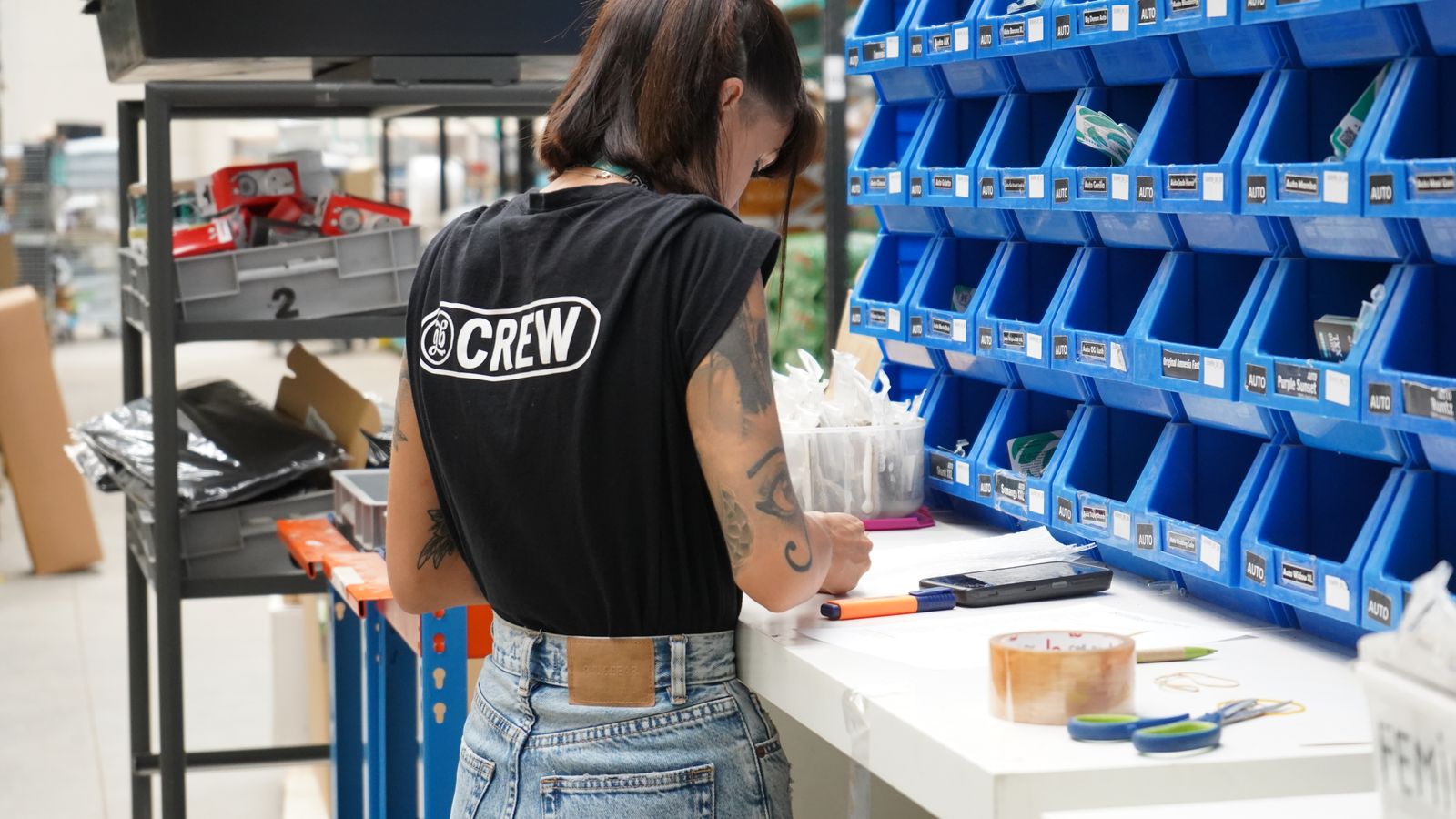
- Pass 1 (line-level): an operations technician checks every unit against the SKU-specific checklist
- Pass 2 (audit-level): a separate QA tech randomly samples 5% of the load and verifies labeling, weights, and box contents
Anything that fails pass 2 sends the whole batch back to pass 1. This double-gate is the reason our FBA compliance rate sits at 100% — every shipment we send arrives clean.
What this means for brands
You can do all of this yourself. Many brands successfully manage inbound compliance in-house. But if you're going to do it, treat it as a controlled process, not as a checklist someone scans once. The inbound step is where many marketplace problems begin — and where the cheapest mistakes get made.
Lanstar connects this work to purchasing, inventory control, outbound freight, and marketplace replenishment. Our trucks head to fulfillment centers weekly, and every box that leaves our dock is checked against the same list above.